


News and Information
NEWS
Technical Specifications and Considerations for Customized Selection of Equipment Enclosures
2026-05-21
In the fields of industrial automation and precision instrumentation, equipment enclosures serve not only as physical housings but also as the first line of defense for ensuring the safe operation of critical components. To maximize the performance of these enclosures in real-world applications and prevent equipment damage or operational challenges caused by improper selection, it is essential to rigorously adhere to the following five technical specifications when customizing them.
I. Precise Measurement and Optimized Spatial Adaptation
Dimensional design is the foundation of customizing equipment protective enclosures. Dimensional deviations not only affect packing efficiency but also compromise equipment safety. An enclosure that is too small can lead to stress concentrations during assembly, potentially damaging interfaces or panels; conversely, an enclosure that is excessively large increases unnecessary payload, reducing portability and storage efficiency. Recommended approach: Prior to customization, conduct precise 3D measurements of the equipment’s external dimensions, and perform reverse engineering based on the thickness of internal cushioning layers—such as EVA or PE foam—to ensure a tight fit between the equipment and the enclosure, providing secure support without appearing bulky.
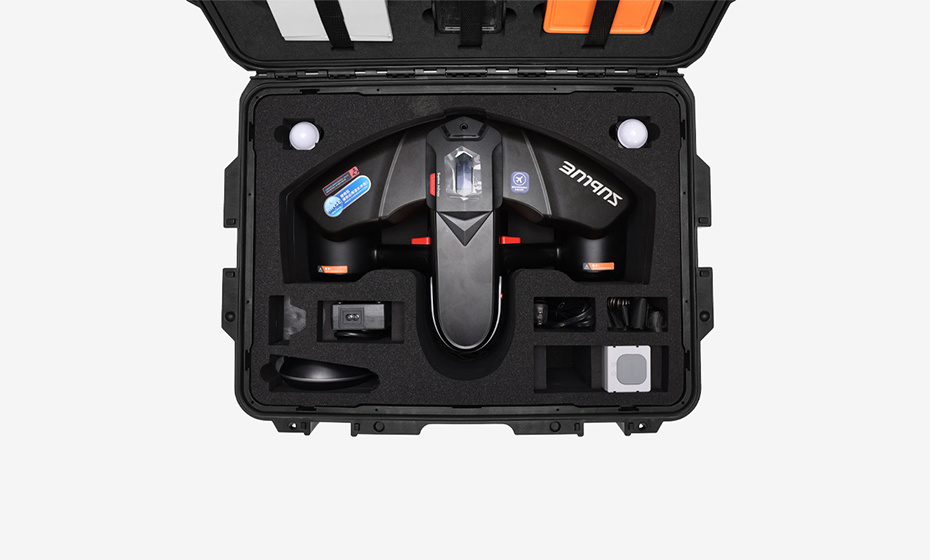
II. Rigorously select base materials to ensure compliance with protection-class requirements.
Material properties directly determine the mechanical strength and environmental resilience of protective enclosures. For complex and variable industrial environments, it is recommended to select high-performance engineering materials, such as modified polypropylene (PP). These materials exhibit excellent chemical resistance, effectively withstanding exposure to acids, alkalis, and oil‑based contaminants. Moreover, their outstanding impact toughness efficiently absorbs external impact energy, preventing enclosure rupture and providing robust protection for the sensitive instruments inside.

III. Strengthen Sealing and Establish Multiple Lines of Defense
The hinges and latches of the equipment enclosure must be secure and reliable to prevent accidental opening during transport. At the same time, make full use of high‑quality sealing strips and automatic pressure‑balancing valves. The sealing strips effectively block the ingress of dust and liquids, while the pressure‑balancing valve equalizes the air pressure inside and outside the enclosure, preventing the cabinet from expanding or becoming difficult to open due to changes in altitude or temperature—ensuring a completely watertight and dust‑free seal.
IV. Scientific Hole Design: Balancing Heat Dissipation and Protection
For equipment requiring on‑line operation or generating substantial heat, the enclosure’s opening design and ventilation layout are of critical importance. Opening locations should adhere to the principles of “convenient operation and efficient heat dissipation,” while incorporating waterproof cable glands or labyrinthine airflow paths. This approach ensures effective cable management and thermal convection while simultaneously blocking ingress pathways for moisture, air, and foreign particles, thereby meeting the required IP protection rating.

V. Customized Appearance, Empowering Brand Identity
While ensuring functionality and safety, the aesthetic design of protective enclosures should not be overlooked. By customizing exclusive color schemes and incorporating silkscreened logos or warning labels, you can enhance brand consistency, enable rapid identification and management within equipment clusters, and elevate your brand’s professionalism and premium appeal.

Customizing equipment protection enclosures is a systematic undertaking that requires comprehensive trade-offs across five dimensions: size, materials, sealing, structure, and appearance. As a provider of industry‑wide enclosure solutions, JUESHIMEI consistently advises customers to consider the total lifecycle cost and select protective products with appropriately matched technical specifications and stringent manufacturing standards, thereby ensuring the safety and long-term operational reliability of their equipment assets.
Related Information

undefined

Zhongshan JUESHIMEI Plastic Products Co., Ltd.
Mobile phone:8618022079850
Email:sales@jueshimei.com
Address: No. 32, South Industrial Avenue, Baofeng Community, Xiaolan Town, Zhongshan City
Follow us
Copyright © 2023 Zhongshan JUESHIMEI Plastic Products Co., Ltd.
PowerBy:300.cn